




































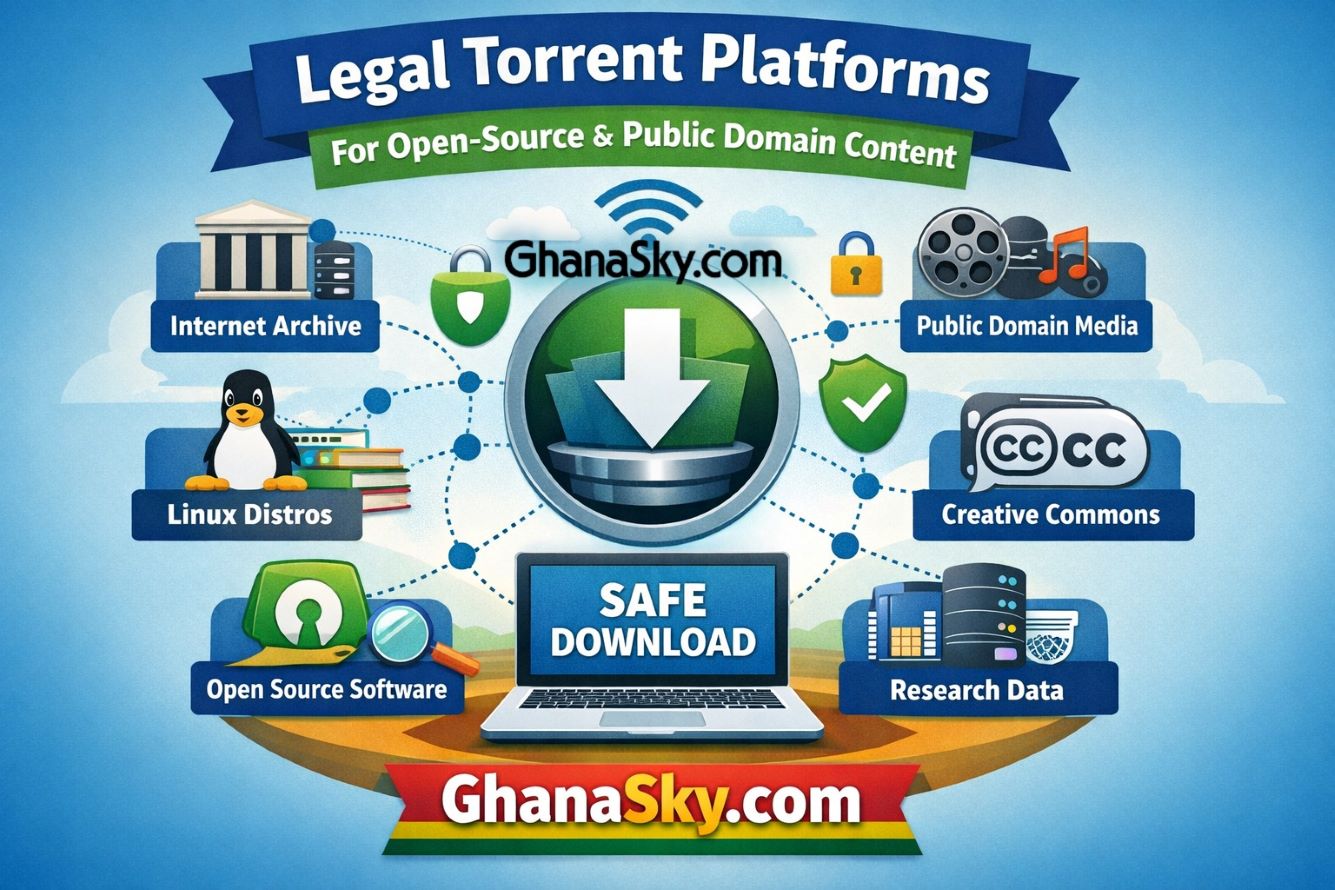
Torrenting is often misunderstood. While it is commonly associated with copyright infringement, torrent technology itself is legal and widely used by governments, universities, and open-source communities to distribute large files efficiently.
According to GhanaSky.com editor, this guide explains how torrenting works, where it is used legally, and which platforms provide public-domain, open-source, and permission-based content, without violating copyright laws or DMCA policies.
What Is Torrent Technology?
Torrenting is a peer-to-peer (P2P) file distribution method. Instead of downloading a file from one server, users download small pieces from multiple sources, reducing server load and improving speed.
This method is commonly used for:
- Open-source software
- Public-domain media
- Academic datasets
- Government and scientific archives
Legal Uses of Torrent Technology
Torrenting is legally used by many trusted organizations, including:
Open-Source Software Distribution
Many Linux operating systems officially provide torrents to reduce bandwidth costs and ensure faster downloads.
Public-Domain Media Archives
Libraries and non-profit organizations distribute historical films, books, and audio that are no longer protected by copyright.
Academic & Research Data
Universities share large datasets legally for research and machine-learning projects.
Trusted Legal Platforms Using Torrent Technology
These platforms distribute content with permission, under open-source, Creative Commons, or public-domain licenses.
1. Internet Archive
Hosts public-domain movies, books, audio recordings, and software using torrent and magnet links.
2. Linux Distribution Mirrors
Official torrents for operating systems such as Ubuntu, Fedora, Debian, and Linux Mint.
3. Academic Torrents
A research-focused platform sharing scientific datasets and academic resources legally.
4. Project Gutenberg (Bulk Torrents)
Offers torrent downloads of thousands of public-domain eBooks.
5. Creative Commons Media Platforms
Independent creators legally share music and video content under redistribution-friendly licenses.
How to Use Torrent Clients Safely & Legally
✔ Download only from official or educational sources
✔ Verify file hashes from original publishers
✔ Respect license terms (GPL, MIT, Creative Commons)
✔ Avoid sites that promote copyrighted entertainment content
Legal vs Illegal Torrenting: Key Difference
| Legal Torrenting | Illegal Torrenting |
|---|---|
| Public domain content | Copyrighted movies/music |
| Open-source software | Paid software cracks |
| Academic datasets | Unauthorized redistribution |
Torrent technology is a powerful and legitimate tool when used responsibly. From open-source software to historical archives and academic research, legal torrent platforms continue to play an important role in global digital distribution.
Using torrents ethically protects creators, respects copyright law, and keeps your website compliant with advertising policies.